Degree Requirements - Bachelor of Science with a major in Biology (120 credits)
This information is from the current
Undergraduate Academic Catalog
To obtain a Bachelor of Science with a major in Biology, students must earn a minimum of 39 credit hours in applicable course work in biology and 20 of the 39 credit hours must be completed at Detroit Mercy. The following are the minimal specific course requirements:
General Biology Sequence (10 credits)
A grade of "C" or better for each course in this sequence is a prerequisite to all other biology courses in the department for Biology majors.
- General Biology I (3 credits) (meets Core C1 with )
- General Biology Laboratory I (2 credits) (meets Core C1 with )
- General Biology II (3 credits)
- General Biology Laboratory II (2 credits)
Core Biological Competencies (15 credits)
- Comparative Vertebrate Anatomy (3 credits)
- Genetics (3 credits)
- Biostatistics (3 credits) (meets Core B2)
- One of the following:
- Evolution (3 credits)
- Ecology (3 credits)
- Biology and Social Issues (3 credits) (meets Core IT1)
Additional Requirements for all Biology Majors (14+ credits)
- Three additional biology laboratories (beyond , , , , and ) (6 credits)
- Biology Electives (additional courses from BIO 2600-4999) to reach a minimum of 39 biology credits (8+ credits) which include:
- Any of the above-listed courses in which the student has a special interest, or that are recommended by professional schools.
- Examples of additional biology electives: Microbiology, Physiology, Cell and Molecular Biology, Histology, Developmental Biology, Cancer Biology, Immunology, Animal Behavior, Human Anatomy, Human Genetics, Principles of Neurophysiology, Pathophysiology, and Pharmacology. With special permission, juniors and seniors may elect directed studies courses. However, a maximum of 2.0 credits total of BIO 4900/BIO 4920/BIO 4930 may count toward the 39 Biology credits required.
Biology majors must also complete the University Core Curriculum requirements and the following science and mathematics courses:
Required Supporting Courses (30-31 credits)
- Elementary Functions (3 credits) or Analytic Geometry and Calculus I (4 credits) (meets Core B1)
- General Chemistry I (3 credits)
- General Chemistry I (3 credits)
- Chemistry Laboratory I (1 credit)
- Chemistry Laboratory II (1 credit)
- Organic Chemistry Laboratory I (1 credit)
- Organic Chemistry Laboratory II (1 credit)
- Organic Chemistry I (3 credits)
- Organic Chemistry II (3 credits)
- General Physics I (3 credits)
- General Physics Lab I (1 credit)
- General Physics II (3 credits)
- General Physics Lab II (1 credit)
- Health Care Ethics (3 credits) (meets Core F1)
Students are encouraged to take a higher-level mathematics course if inclined. Many of these chemistry and physics courses, or their equivalent or higher courses, are required by professional schools of medicine and dentistry.
Note that chemistry courses (including labs) require a "C" or better to move on to the next course in the sequence.
Core Curriculum
In addition to the courses required for this program listed above, the student must also fulfill the requirements of the University Core Curriculum for this program. Some of these courses may be satisfied by courses in your program.
Please review your Degree Evaluation or consult your academic advisor for more information.
Total credits required: 120 credits
Other Requirements
- Pre-dental track students should take Microbiology (), Physiology () Introduction to Psychology , Introduction to Sociology , and one or two semesters of Biochemistry.
- Pre-Physician Assistant track students should take these additional courses required by the Detroit Mercy Physician Assistant program and others: and and select these as biology elective courses: BIO / and Students interested in Physician Assistant programs might also consider , , , , and .
- Five-year BS/MS (biology/physician assistant) and seven-year BS/DDS (biology/dental) students satisfy major requirements specified for their programs.
Optional Concentration - Applied Genetics
This information is from the current
Undergraduate Academic Catalog
The Applied Genetics concentration is designed to equip students with a broad landscape of the applications of genetics in biology and medicine. As indicated below, the courses within the concentration demonstrate the continuously expanding applications of genetics into other fields of biology and medicine. Students completing this concentration will have a foundational understanding of the manner in which genetics is no longer a stand-alone discipline but touches on many areas of active research. Through laboratory and lecture courses in this concentration, students will be exposed to different sub-disciplines in genetics including classical genetics, human genetics, molecular genetics, and bioinformatics.
The concentration is a minimum of 13 credits.
Required Courses
- Evolution (3 credits)
- Cellular and Molecular Biology (3 credits)
Laboratory courses (choose 2)
- Genetics Laboratory (2 credits)
- Bioinformatics of Bacteriophage Genomes (2 credits)
- Applied Metagenomics (3 credits)
- Metagenomics Research (4 credits)
- Advanced Microbial Phage Genomics: SEA-GENES (4 credits)
- Cellular and Molecular Biology Lab (2 credits)
Elective Course (choose 1)
- Cancer Biology (3 credits)
- Human Genetics (3 credits)
Contact Jacob Kagey, Ph.D., (kageyja@udmercy.edu) for more information.
Optional Concentration - Neuroscience
This information is from the current
Undergraduate Academic Catalog
The Neuroscience concentration focuses on the scientific investigation of behavior, neurological and mental processes as well as providing students with basic scientific skills training. A concentration in neuroscience will offer students an opportunity to learn about theory and research on the brain and nervous system from several perspectives. Students will come to understand how developments in biology, psychology, chemistry and related fields alter knowledge and research techniques in the other fields. This cross-disciplinary concentration is not housed within a single department but, rather, is directed and taught primarily by faculty in the departments of Biology, Chemistry and Biochemistry and Psychology.
The concentration is a minimum of 12 credit hours, a minimum of three credit hours in PYC, and six credit hours from 3000+ level or higher.
Choose 1 of the following
- Principles of Neurophysiology (3 credits)
- Biopsychology (3 credits)
Choose 1 of the following (if not used above)
- Animal Behavior (3 credits)
- Principles of Neurophysiology (3 credits)
- Recent Advances in Chemistry and Biochemistry (3 credits)
- Medicinal Chemistry and Drug Discovery (3 credits)
Choose 2 of the following (if not used above and at least one course must be PYC)
- Animal Behavior (3 credits)
- Principles of Neurophysiology (3 credits)
- Fundamentals of Pharmacology (3 credits)
- Medicinal Chemistry and Drug Discovery (3 credits)
- Recent Advances in Chemistry and Biochemistry (3 credits)
- Research Methods I (3 credits)
- Research Methods II (3 credits)
- Biopsychology Laboratory (3 credits)
- Perceptual and Cognitive Processes (3 credits)
- Perceptual and Cognitive Process Laboratory (3 credits)
Contact Rachelle Belanger, Ph.D., (belangra@udmercy.edu) for more information.
Optional Concentration - Biology Research
This information is from the current
Undergraduate Academic Catalog
The Research concentration within the Biology major is designed for students who are interested in pursuing further research in graduate school or careers in industry, medicine, and science education. A research concentration will offer students an opportunity to read and explore scientific literature, develop hypotheses, design and implement experiments, collect and analyze data and communicate their findings. The Research concentration involves both course-based research experiences and mentored laboratory research experiences. Students will gain experience problem solving by using the scientific method.
The concentration is a minimum of nine credits and must include six credit hours from courses 3000+ level or higher.
Inquiry-based laboratory or course-based undergraduate research experience (at least 2 credits)
- Genetics Laboratory (2 credits)
- Bioinformatics of Bacteriophage Genomes (2 credits)
- Applied Metagenomics (3 credits)
- Metagenomics Research (4 credits)
- Histology Laboratory (2 credits)
- Advanced Microbial Phage Genomics: SEA GENES (4 credits)
- Ecology Laboratory (2 credits)
- Physiology Laboratory (2 credits)
- Cell and Molecular Biology Laboratory (2 credits)
- Research in Chemistry Lab (1 credit)
- Organic Chemistry Laboratory II (1 credits)
- Quantitative Analysis Laboratory (1 credit)
Laboratory Research (3-7 credits):
Each student must take at least three academic semesters and/or summers of mentored research, and it must include the preparation and presentation of a thesis.
- Directed Studies: Laboratory Research (1-2 credits)
- Directed Studies: Advanced Laboratory Research (1-2 credits)
- Undergraduate Research Thesis I (0-1.5 credits)
- Undergraduate Research Thesis II (0-1.5 credits)
-OR-
- Introduction to Undergraduate Research (1-2 credits)
- Undergraduate Research (1-2 credits)
- Undergraduate Research Thesis I (0-1.5 credits)
- Undergraduate Research Thesis II (0-1.5 credits)
-OR-
- Undergraduate Research (0 credits)
- Undergraduate Research Thesis I (0-1.5 credits)
- Undergraduate Research Thesis II (0-1.5 credits)
-OR-
- Honors Thesis Proposal (1 credit)
- Honors Thesis Approval (1 credit)
- Honors Thesis Defense (1 credit)
Research Portfolio (0 credits; Pass/Fail):
Each student must prepare and submit a research portfolio containing the products from each of the courses in the research concentration. These include research presentations, reports, posters, research proposal, research reflections, final thesis, and final presentation. The research portfolio is the full story of the student's research trajectory and achievements. The portfolio is evaluated by the Research Concentration Committee.
Total Credits: 9 credits
Contact Rachelle Belanger, Ph.D., (belangra@udmercy.edu) or Jacob Kagey, Ph.D., (kageyja@udmercy.edu) for more information.


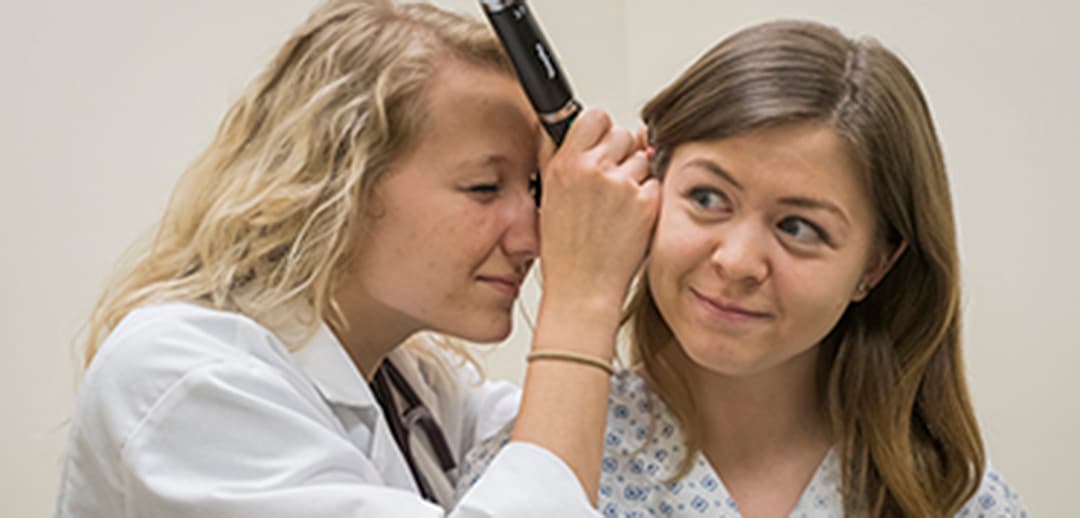 Enter Detroit Mercy as a freshman and graduate five years later with both a Bachelor of Science in Biology and a Master of Science in Physician Assistant Studies.
 Spend your first three years at Detroit Mercy studying pre-pharmacy, then complete your final three years at the University of Saint Joseph School of Pharmacy.
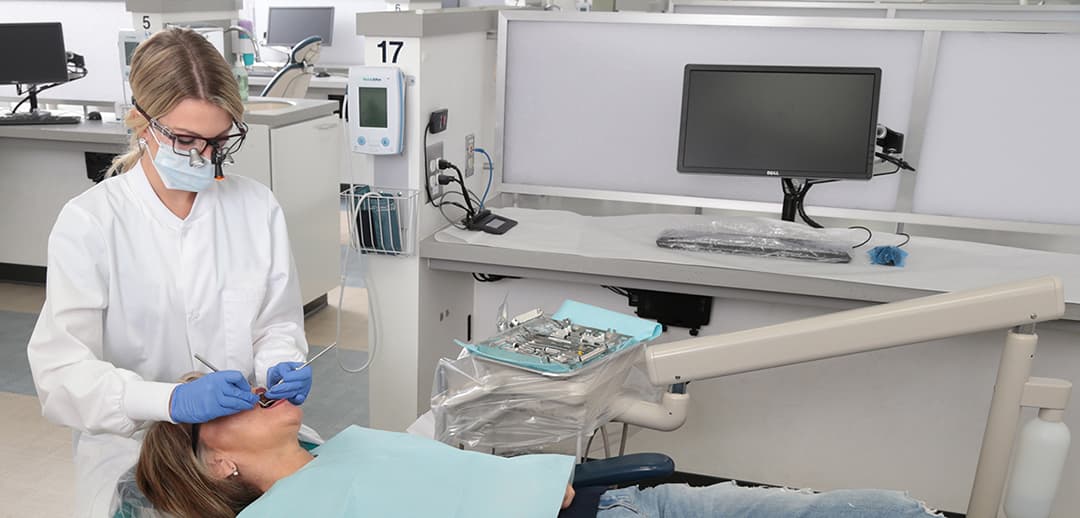 Qualified students can earn both a bachelor's degree and a Doctor of Dental Surgery degree in seven years instead of the traditional eight.
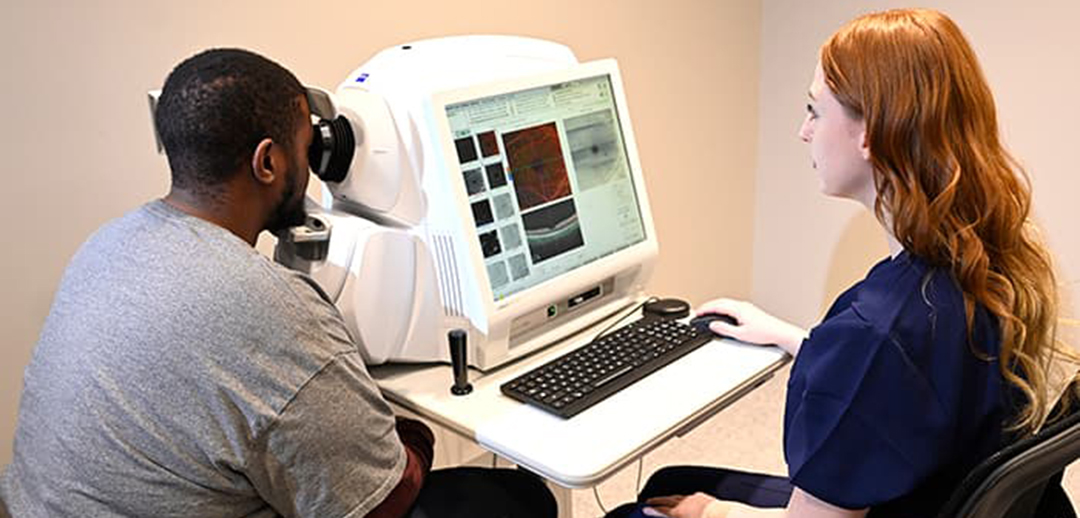 Qualified students can earn both a bachelor's degree and a Doctor of Optometry degree in seven years instead of the traditional eight.